Here's a fun fact nobody tells beginners: most “wrong notes” aren't wrong notes at all — they're right notes played at the wrong time. You can nail every fret and still sound like a washing machine with a brick in it, purely because of rhythm. So before you blame your fingers, let's talk about the five timing mistakes I watch guitar students make on repeat. I made all of them too, which is how I know them so intimately.

Mistake 1: Not actually feeling the beat
A beat is just the click of the metronome — four of them in a 4/4 bar. Beginners play at the guitar instead of to the beat. Fix: tap your foot, out loud, and put your note down at the exact moment the foot hits the floor. Quarter notes should land dead on that tap. If your foot and your pick disagree, the foot is right.
Mistake 2: Rushing sixteenth notes
Sixteenths aren't hard because they're clever — they're hard because they're fast, and panic makes everyone speed up. The fix is almost insulting: slow the metronome down. Fit four even notes between two foot-taps and keep them the same length. Even notes always stay even; the second you let the last one clip short, the whole line trips over itself.
Mistake 3: Being scared of triplets
Triplets look sinister and do absolutely nothing naughty. An eighth-note triplet is just three evenly-spaced notes squeezed into one beat instead of two. Say it out loud — “trip-o-let, trip-o-let” — one syllable per note, one group per tap. Your mouth learns the feel faster than your hands ever will, then your hands copy your mouth.
Mistake 4: Treating rests as “do nothing”
A rest is not a coffee break — it's a note you actively stop. Silence has to be as intentional as sound, which means muting on time, not just failing to play. Count straight through the rest (“one, two, three, four”) and mute on the beat you're skipping. Groove lives in the gaps as much as the notes.
Mistake 5: Ignoring dotted notes
Dotted rhythms trip people up because a dot secretly adds half the note's value — a dotted quarter is a quarter plus an eighth.
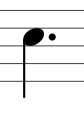
Don't try to “feel” it — break it into the smallest note and count. A dotted quarter becomes three eighths, so count “1 2 3” in eighths and only play beat 1. Boring? Yes. Reliable? Also yes.
The one takeaway
When a passage falls apart, stop drilling the notes and count out loud instead. Nine times out of ten the problem is timing, not fingers — and counting fixes it faster than any amount of shredding. Want the full breakdown of every note and rest value, with audio examples? Read the complete notes and rest values guide →. Then glue it in with a proper rhythm exercise, make peace with the metronome, and if you want to sound musical rather than robotic, steal ideas from melodic rhythm on guitar.
If this saved you from one more argument with a click track, you can throw a coffee my way on Patreon — no pressure, purely for the good of your timing. Now go count out loud where nobody can hear you.