We've all done it: you find a jaw-dropping guitar lick on YouTube, loop it for a week until your fretting hand files a complaint, and then — the moment someone counts in a real song — it just refuses to come out. The notes are in your fingers, but nothing fits. Frustrating, right? The good news: it's almost never a talent problem. It's a handful of very common, very fixable mistakes. Here are the five I see most, and the one habit that quietly solves all of them. (For the full method behind the fix, jump to the complete lick-creation guide →.)
Mistake 1: Memorising the whole lick instead of a small movable piece
A long lick is basically a phone number with no area code — great until you need it somewhere else. If you learn one giant 20-note run as a single frozen block, you can only ever play that exact block, in that exact spot. The fix is to chop it into a tiny, repeatable shape — a lick fragment — that you can slide around the neck. Learn the little unit, not the monument.
Mistake 2: Ignoring the key of the song
You learned the lick in A minor, the band drops into F♯ minor, and suddenly your masterpiece sounds like it wandered into the wrong party. A lick isn't magic; it's just notes inside a scale. If you don't know what key you're in, you're gambling. Take two minutes with how do I find the key of a song?, then bend the fragment onto that scale. Same shape, right notes, no clams.
Mistake 3: Chasing a tempo your hands can't hold
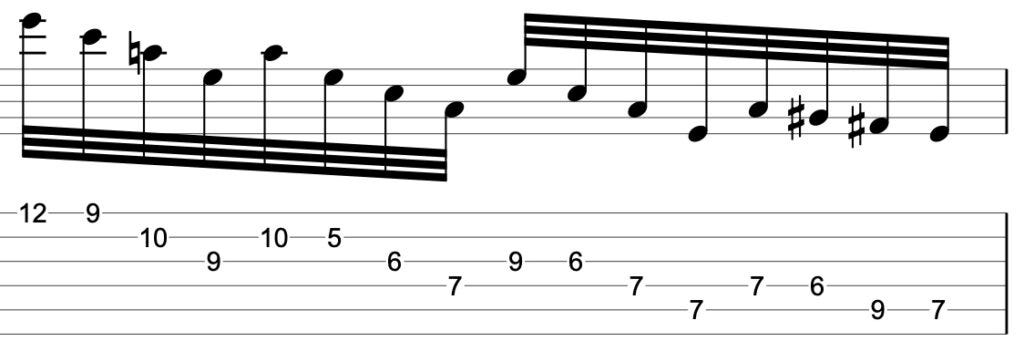
Half of the licks that "don't fit" don't fit because they were recorded at a tempo you'll never squeeze into the actual song. The lick in the source video is played in 32nd notes — try shoehorning that into a mid-tempo tune 1:1 and it's mathematically doomed. A small fragment, on the other hand, stretches and shrinks: play it as triplets, as eighths, as whatever the groove allows. The pattern survives; the exact rhythm bends to the room.

Mistake 4: Practising for 10 hours what your hands already know
Here's the sneaky one: most "new" licks are just old shapes in a new order. Once you own a two-notes-per-string pattern, you don't need another 10-hour practice marathon to use it again — your left and right hand already know the move. After the first 12 notes, your hands basically autopilot. Beginners burn weeks re-learning motions they've already mastered instead of re-deploying them.

Mistake 5: Only ever playing it in one place
The last trap is treating a lick like a museum piece: one position, one string set, one context, forever. The whole point of a fragment is that it sounds fresh every time you move it — different strings, different scale, different spot in the solo. Play the same little idea on the top two strings, then the middle pair, then start it on an off-beat, and one shape becomes ten licks. That's not cheating; that's how the pros make three ideas last a whole solo.
The one takeaway
Stop collecting whole licks like trading cards. Learn small, movable fragments, know your key, and let tempo and context flex around them — that single shift fixes all five mistakes at once. Want the full walkthrough with the exact examples? Read A Guitarist's Guide to Lick Creation →, then put it to work with Improvisation on Guitar — Part 1 and the wider toolbox in Guitar Techniques.
If this saved you from another doomed practice week, you can throw a coffee my way on Patreon — no pressure, purely for the riffs. Now go steal a fragment and abuse it in twelve keys.