Somebody hands you a chord chart, you glance at it for two seconds and you're expected to know the key. Sounds like a magic trick. It isn't — it's four checks, done in order, and you're there before the singer finishes counting you in. This is the cheat-sheet version; if you want the full explanation with all the "why", read How do I find the key of a song? → first and come back here to drill the shortcut.
The 60-second checklist
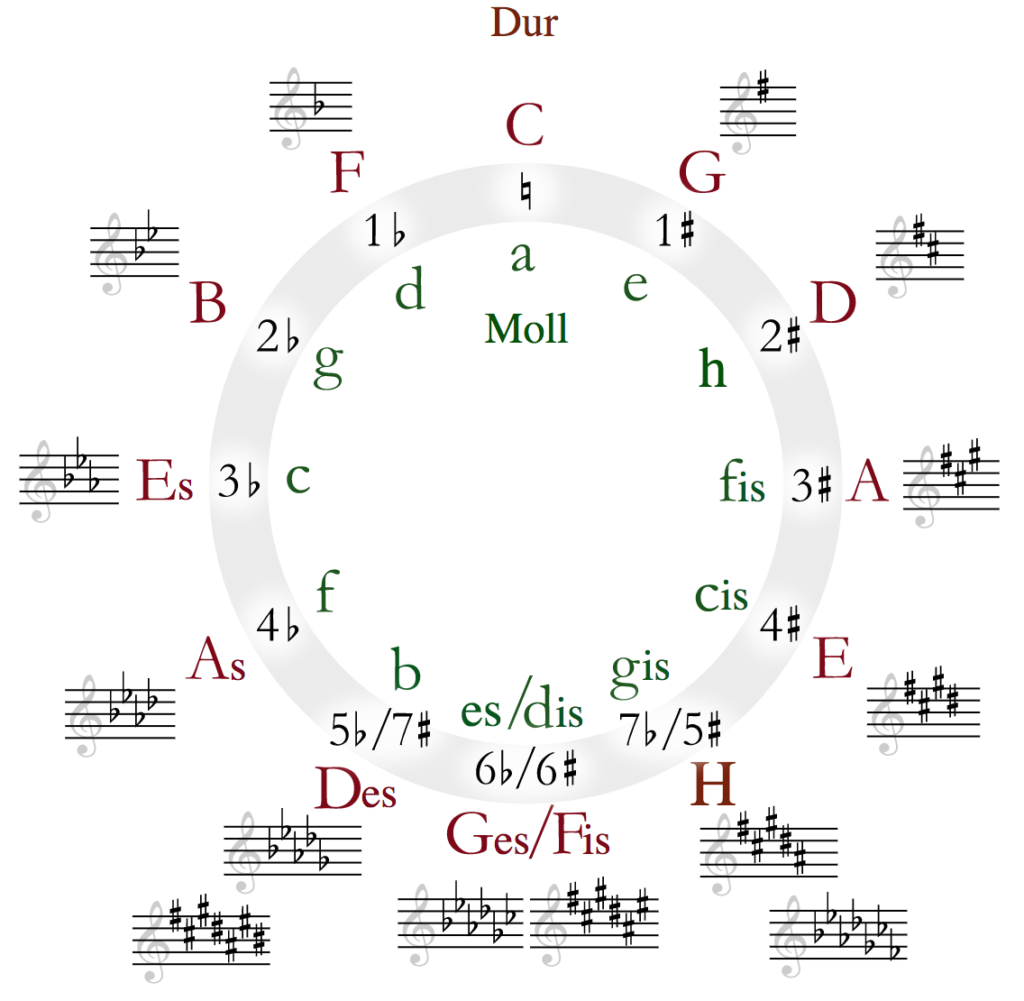
- Count the accidentals. Look at the key signature (or just scan the chords for sharps/flats). Zero accidentals? You're choosing between C major and A minor. One sharp? G major or E minor. One flat? F major or D minor. Every accidental count maps to exactly one major/minor pair — that's the whole secret of the circle of fifths.
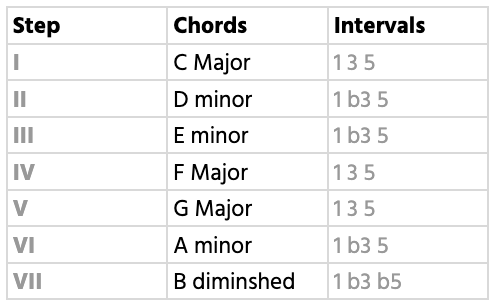
- Shortlist, don't guess. You now have two candidates, a major key and its relative minor, and they share the exact same 7 chords. You are never wrong at this stage — you've just narrowed 12 keys down to 2.
- Check the first and last chord. Most songs open and close on the tonic — the "home" chord. If the tune starts and ends on Am, it's the minor of the pair; on C, it's the major. This isn't a law of physics, just a very strong habit.
- Trust your ear over your eyes. Play through the progression and stop one chord early. Does it feel like something is missing? That missing chord is almost certainly the tonic — the resting point your ear was waiting for.
Why this actually works
Major and relative minor keys are the same 7 notes wearing a different hat — so counting accidentals can only ever get you to a pair, never a single answer. That's not a flaw in the trick, that's music theory being honest with you. The tonic check is what breaks the tie, because your ear already knows how a song is supposed to "land" even before you can name why.
The one takeaway
Accidentals narrow it to two keys, the first/last chord and your ear pick the winner. That's the entire method, and it scales from a three-chord campfire song to a jazz standard with reharmonized bridges. Want every step spelled out with real song examples and audio? Go read the full guide to finding the key of a song →, and once you know the key, the fastest way to actually use it is improvising with the intervals cheat sheet.
If this saved you from twelve minutes of staring blankly at a chart, you can throw a coffee my way on Patreon — no pressure, purely for the riffs. Now go impress a bandmate.