Tapping is the one technique that makes non-guitarists gasp and guitarists quietly panic. On paper it's simple: a hammer-on and a pull-off, just done by a finger that has no business being up on the fretboard. In practice, most beginners' first tapped notes come out sounding like a damp cardboard box. The notes are there, technically — they're just barely audible. So before you blame your guitar, your pickups, or the universe, let's go through the five tapping mistakes I see every week, and the boring fixes that actually cure them.
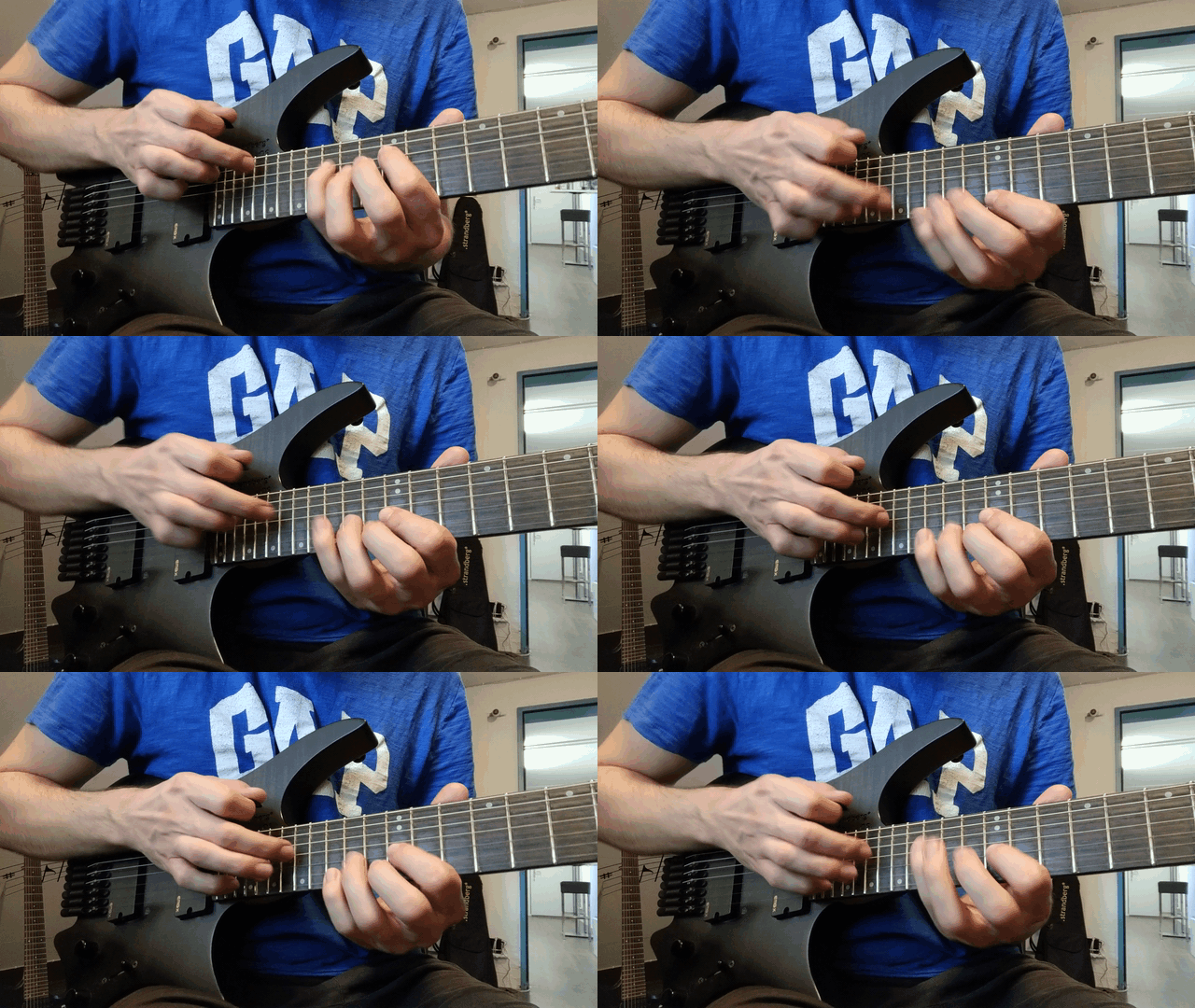
Mistake 1: Tapping with the finger that's holding the pick
The single most common one. People try to tap with the index finger — the exact finger that's clamping the pick — which means every tapped note comes with a frantic little juggling act. Stashing the pick and grabbing it again takes far too long for one measly note. Fix: tap with the middle finger of your picking hand and leave the pick pinched between thumb and index, ready to go. Your index stays employed; your middle finger does the wizardry.
Mistake 2: Tapping at the string instead of into it
A tap is not a polite little poke — it's a hammer-on delivered by the right hand. The note's volume comes entirely from how decisively your fingertip slams the string down onto the fret. Timid taps = dead notes. Fix: aim for the fret with a bit of attitude, land right behind the fretwire, and think "hammer", not "tickle". The same principle that makes a left-hand hammer-on ring is exactly what makes a tap ring — it really is the same technique wearing a different hat.
Mistake 3: Forgetting the pull-off half of the move
Half of tapping isn't the tap at all — it's how you leave the string. When you lift the tapping finger, don't just pick it straight up; flick it slightly sideways so it plucks the string on the way out, like a mini pull-off. That flick is what sounds the next (lower) note. Skip it and the line dies the instant your finger leaves. This is the bit everyone forgets, and it's why a tapped arpeggio can sound gapless once you nail it.
Mistake 4: No muting, so everything turns to mush
With a finger flying up to the high frets and both hands hammering away, your idle strings start ringing sympathetically and the whole thing turns to soup. Fix: let the heel of your picking hand rest lightly across the strings you're not using, and let a spare left-hand finger lean on the neighbours. Silence has to be as deliberate as sound — a clean tapped lick is 50% muting you'll never see in the video.
Mistake 5: Expecting the pinky to behave
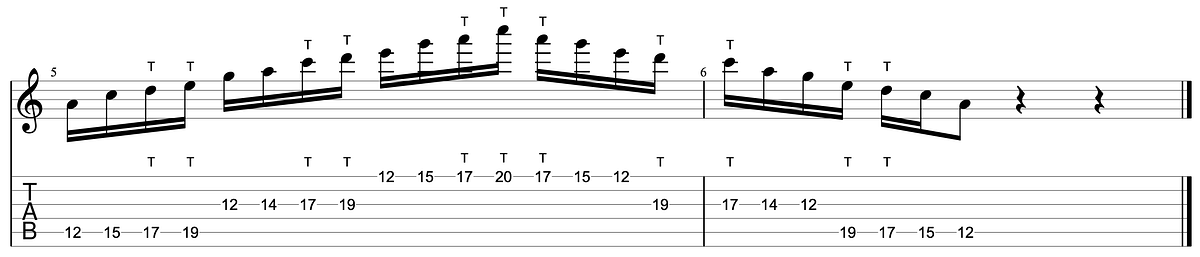
If you move on to trendy two-finger tapping — middle and ring finger of the picking hand — you'll discover your right-hand pinky is a diva that refuses to cooperate. That's normal. Don't force whole licks with an untrained pinky; give it its own slow, dull warm-up until it earns a place in the band. Coordination is trainable, but only if you stop expecting it for free on day one.
The one takeaway
Volume in tapping comes from decisive hammer-ons and a real sideways pull-off, not from speed — get those two right and clean notes follow. Want the full ground-up walkthrough with the four tapping variations, the A-minor arpeggio and the "cheat" lick that sounds ten times harder than it is? Read the complete tapping basics guide →. Then borrow the same fretting logic from string skipping and sweep picking basics, and see where it all fits in Roberto's overview of guitar techniques.
If this rescued one of your tapped licks from sounding like wet cardboard, you can throw a coffee my way on Patreon — no pressure, purely for the riffs. Now go tap something obnoxiously loud.